A cataract is a cloudiness within the lens of the cat’s eye. The lens of the eye works much like the lens of a camera, helping to focus on objects so the cat can see them clearly. When cataracts affect a big part of the lens, they cause vision loss and may lead to blindness.
Every cat experiences cataracts differently. A cataract may develop rapidly or over a period of time. There are four stages of cataracts:
Incipient cataract is a small cataract that doesn’t interfere with vision. It typically occurs with age and often goes unnoticed. However, it can progress and become more significant.
Immature cataract involves a larger part of the lens, which may start to affect vision.
Mature cataract is when the cat’s entire lens is blocked by the cataract and there is no vision.
Hypermature cataract is when the lens starts to shrivel up due to water and protein loss. In younger cats, some vision may return.
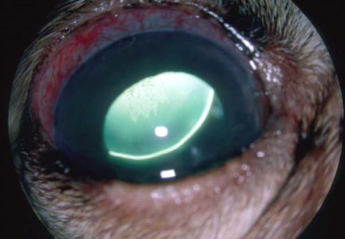
A cataract is a cloudiness within the lens of the dog’s eye. The lens of the eye works much like the lens of a camera, helping to focus on objects so that the dog can see them clearly. When cataracts affect a big part of the lens, they cause vision loss and may lead to blindness.
Every dog experiences cataracts differently. A cataract may develop rapidly or over a period of time. There are four stages of cataracts:
Incipient cataract is a small cataract that doesn’t interfere with vision. It typically occurs with age and often goes unnoticed. However, it can progress and become more significant.
Immature cataract involves a larger part of the lens, which may start to affect vision.
Mature cataract is when the dog’s entire lens is blocked by the cataract and there is no vision.
Hypermature cataract is when the lens starts to shrivel up due to water and protein loss. In young dogs, some vision may return.
Glaucoma in dogs refers to an increased pressure of the fluid within the dog’s eye. This increased pressure is both painful and may result in loss of vision due to damage to the retina and optic nerve. Glaucoma can develop quickly or over time.
Canine glaucoma can be divided into two main categories, depending upon whether the glaucoma is occurring primarily or secondary to another disease process within the eye.
Primary Glaucoma occurs when the fluid in the front of the eye backs up due to a malfunction in the drainage area. It is inherited and is not the result of underlying disease.
Secondary Glaucoma occurs when the flow of fluid is blocked due to trauma or due to another condition such as tumors, advanced cataracts, eye cancer, inflammation, or infection.