















How-To Videos
![]()
Take care of your pet at home with these step-by-step video tutorials
-
MedicationAugust 12, 2025
How to Prepare EyeQ Amniotic Eye Drops for Pets
1. Warm the Bottle: Hold the bottle in your hand until the contents are at room temperature.
Play
2. Remove the Safety Seal: Press downward firmly with the palm of your hand to break the seal.
3. Mix the Solution: The amnion will fall into the saline, and the bottle will appear cloudy. If it does not look cloudy, try pressing on the top again until the seal is broken.
4. Remove the Cap: The drops are ready to administer.How to Prepare EyeQ Amniotic Eye Drops for Pets
1. Warm the Bottle: Hold the bottle in your hand until the contents are at room temperature.
2. Remove the Safety Seal: Press downward firmly with the palm of your hand to break the seal.
3. Mix the Solution: The amnion will fall into the saline, and the bottle will appear cloudy. If it does not look cloudy, try pressing on the top again until the seal is broken.
4. Remove the Cap: The drops are ready to administer. -
MedicationMay 27, 2024
How to Give Intranasal Midazolam to a Dog During a Seizure
In this step-by-step tutorial, Dr. Betsy Wong, Resident Veterinarian at the Schwarzman Animal Medical Center in New York City, demonstrates how to prepare and administer intranasal midazolam to your dog during a seizure. Always consult your veterinarian for specific instructions tailored to your dog’s situation. It is essential to use the medication strictly as directed.
PlayHow to Give Intranasal Midazolam to a Dog During a Seizure
In this step-by-step tutorial, Dr. Betsy Wong, Resident Veterinarian at the Schwarzman Animal Medical Center in New York City, demonstrates how to prepare and administer intranasal midazolam to your dog during a seizure. Always consult your veterinarian for specific instructions tailored to your dog’s situation. It is essential to use the medication strictly as directed.
-
WellnessApril 08, 2024
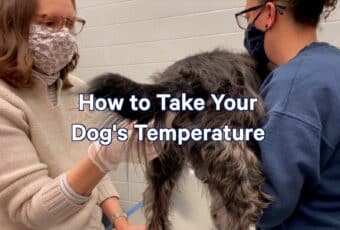
How to Take Your Dog’s Temperature
Enlist a helper to hold your dog still. Lubricate a fast-acting rectal thermometer, and insert it into your dog’s rectum just past the thermometer’s tip. Hold it steady until it beeps. A dog’s normal body temperature is between 100.2 and 102.5 degrees Fahrenheit.
Play -
February 04, 2024
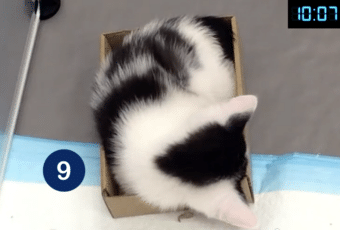
How to Measure Respiratory (Breathing) Rate in a Cat
Cats at rest normally take 30 or less breaths per minute. The breathing should be smooth, with exhales taking longer than inhales. To check your cat’s respiratory rate, count the number of times the cat’s chest rises (inhales) and falls (exhales). Each rise/fall combination equals one breath. Count for 30 seconds and then multiply by 2 to get the number of breaths per minute. A normal resting/sleeping respiratory rate for cats is between 15 and 30 breaths per minute.
PlayHow to Measure Respiratory (Breathing) Rate in a Cat
Cats at rest normally take 30 or less breaths per minute. The breathing should be smooth, with exhales taking longer than inhales. To check your cat’s respiratory rate, count the number of times the cat’s chest rises (inhales) and falls (exhales). Each rise/fall combination equals one breath. Count for 30 seconds and then multiply by 2 to get the number of breaths per minute. A normal resting/sleeping respiratory rate for cats is between 15 and 30 breaths per minute.
-
WellnessFebruary 04, 2024
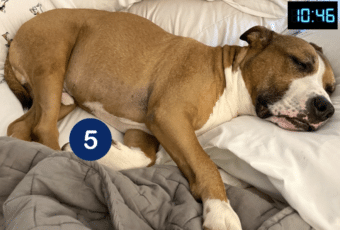
How to Measure Respiratory (Breathing) Rate in a Dog
⏱️ Learning to count your dog’s resting respiratory rate can help determine if they are seriously ill. To check your dog’s respiratory rate, count the number of times the dog’s chest rises (inhales) and falls (exhales). Each rise/fall combination equals one breath. Count for 30 seconds and then multiply by 2 to get the number of breaths per minute. A normal resting/sleeping respiratory rate for dogs is between 15 and 30 breaths per minute. A rate greater than 40 breaths per minute indicates the need for a visit to the emergency room.
PlayHow to Measure Respiratory (Breathing) Rate in a Dog
⏱️ Learning to count your dog’s resting respiratory rate can help determine if they are seriously ill. To check your dog’s respiratory rate, count the number of times the dog’s chest rises (inhales) and falls (exhales). Each rise/fall combination equals one breath. Count for 30 seconds and then multiply by 2 to get the number of breaths per minute. A normal resting/sleeping respiratory rate for dogs is between 15 and 30 breaths per minute. A rate greater than 40 breaths per minute indicates the need for a visit to the emergency room.